Room 202-3, Building 30, No. 220 Xianggong Road, Xiangzhou District, Zhuhai City
08.00 AM-09.00 PM

The manufacturing industry is undergoing a profound transformation, driven by the rise of intelligent manufacturing – a paradigm shift leveraging technologies like Artificial Intelligence (AI), the Internet of Things (IoT), and advanced robotics to optimize production processes. At the heart of this revolution lies the need for precise, efficient, and reliable motion control. And underpinning much of that motion control are gear motors, playing a far more critical role than ever before in enabling smart factories to thrive. This article explores the fundamental principles of gear motors and their vital role in driving the intelligent manufacturing revolution, highlighting how advancements in this area are shaping the future of production.
Gear motors combine a motor with a gearbox to deliver specific torque and speed characteristics. A motor provides the rotational power, while the gearbox modifies that power, adjusting torque and speed to suit the demands of various manufacturing applications. The core principles involve gear ratios – the ratio of the input to output speeds and torques. Different gear configurations (spur, helical, bevel, worm) offer varying advantages in terms of efficiency, noise reduction, and load capacity.
Intelligent manufacturing encompasses a broad range of technologies. Gear motors are integral to many of them:
1. Robotics and Automation: Robots are the backbone of many smart factories. Gear motors provide the precise, controlled motion needed for robotic arms, grippers, and other actuators. For example, in assembly lines, robotic arms use gear motors to precisely position components, tighten screws, and perform complex tasks with high accuracy. The demand for agile and responsive robots necessitates gear motors with high torque-to-weight ratios and precise encoder feedback. This is further emphasized by the increased adoption of collaborative robots (cobots) which demand very precise and predictable motion.
2. CNC Machines and Machining Centers: Computer Numerical Control (CNC) machines rely on precise positioning of cutting tools. Gear motors are the workhorses driving the axes of these machines. The accuracy and repeatability of CNC machining depend heavily on the performance of the gear motors. High-precision gear motors with integrated encoders are crucial for maintaining tolerances and producing high-quality parts. The increasing trend toward 5-axis machining further amplifies the demand for advanced gear motor technology.
3. Conveyor Systems and Material Handling: Efficient material handling is critical in any manufacturing operation. Gear motors power conveyor systems, automated guided vehicles (AGVs), and other material transport equipment. Robust gear motors are required to handle heavy loads and operate continuously in demanding environments. IoT integration allows for real-time monitoring of conveyor system performance, with gear motor data contributing to predictive maintenance strategies.
4. Packaging and Bottling: In the fast-paced world of packaging, gear motors are used in filling machines, capping machines, and labeling equipment. Their precision and reliability are essential for maintaining product quality and meeting high production volumes. Smart packaging solutions, which incorporate sensors and data analytics, rely on gear motors for precise control of packaging processes.
5. 3D Printing: The rapidly growing 3D printing industry relies heavily on precise motor control for depositing material layer by layer. Gear motors are found in the print head and build platform, ensuring accuracy and resolution. The future of 3D printing, including large-scale industrial applications, will further increase the demand for robust and high-performance gear motors.
The integration of AI and IoT is further revolutionizing the use of gear motors in intelligent manufacturing.
MES-Drive is at the forefront of developing gear motors specifically designed to integrate with these emerging technologies. Their motors boast integrated sensors, robust communication protocols, and optimized performance for use in AI-driven control systems, making them a key enabler for smart manufacturing environments.
The future of gear motor technology is focused on:
The rise of edge computing is also playing a key role, allowing real-time data processing and control to be performed closer to the source, further enhancing the responsiveness and efficiency of intelligent manufacturing systems powered by gear motors.
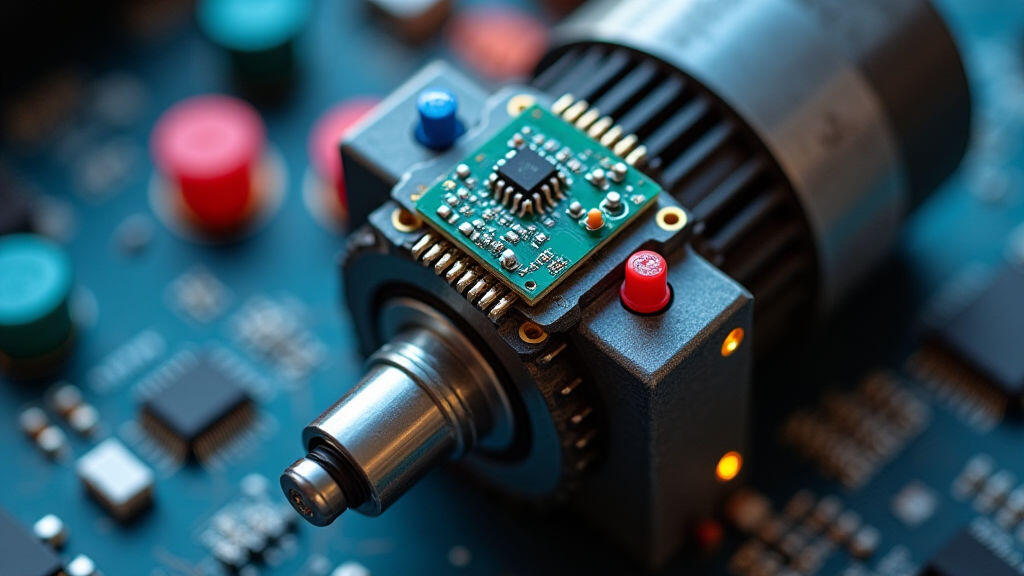
Gear motors are no longer just components; they are integral elements of the intelligent manufacturing ecosystem. Their ability to provide precise motion control, coupled with advancements in AI and IoT, is driving innovation across the manufacturing industry. The trend towards smart factories, driven by the need for increased efficiency, productivity, and flexibility, will continue to fuel demand for high-performance, intelligent gear motor solutions. Companies like MES-Drive are poised to lead this evolution, developing innovative gear motor technologies that will shape the future of manufacturing. As we navigate the challenges and opportunities presented by events like the increasing focus on supply chain resilience and the push for sustainable manufacturing, robust and adaptable gear motor solutions will be essential for achieving operational excellence and maintaining a competitive edge. The future of manufacturing is inextricably linked to the advancement of gear motor technology.

Leave A Reply
Your email address will not be published. Required fiels are marked